
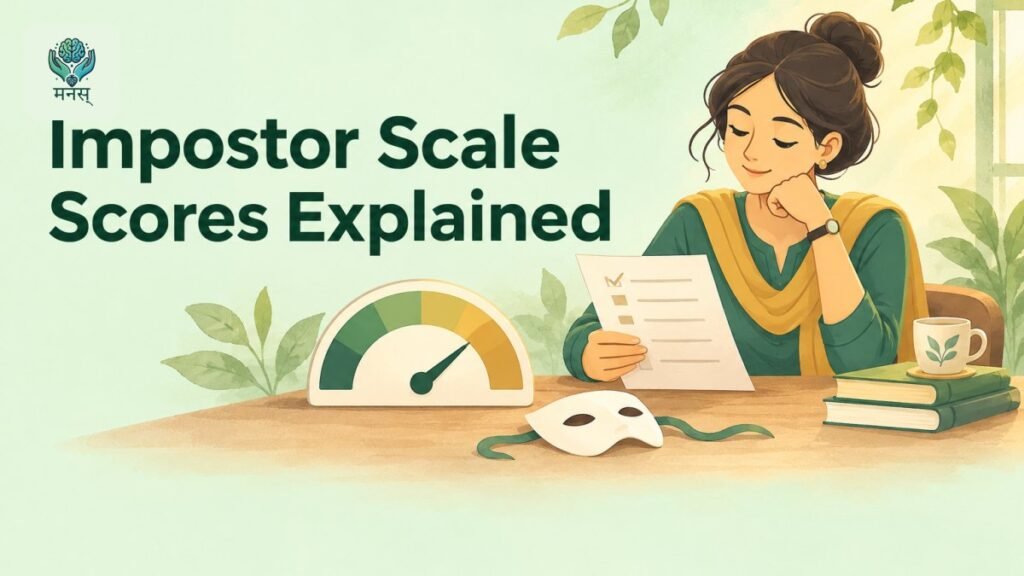
Clance Impostor Phenomenon Scale (CIPS): Scoring and Bands
The Clance Impostor Phenomenon Scale has 20 items scored 1 to 5. Learn how the 20 to 100 total is worked out, what each band means and the test’s limits.

The Clance Impostor Phenomenon Scale has 20 items scored 1 to 5. Learn how the 20 to 100 total is worked out, what each band means and the test’s limits.
How the 12-item Self-Compassion Scale short form works, what the low, moderate and high bands on Manas 365 mean, what research links it to, and its limits.
What the 16-item Penn State Worry Questionnaire measures, how the free Manas 365 version is scored, what the low, moderate and high bands mean, and where the limits are.
The LSAS-SR rates fear and avoidance in 24 social and performance situations. Learn how the 0 to 144 total is scored, what the bands mean and what to do next.
What the 20-item CES-D depression scale measures, how its 0–60 score works, what the cut-off of 16 means and what to do next.
What the DAST-10 drug screening test asks, how its 0–10 score is worked out, what each score range means and what to do next. Screening, not a diagnosis.
The SAS-SV is a 10-item screen for problematic phone use. Learn how it is scored, what the 31 and 33 cut-offs mean, its limits and what to do next.
The SCOFF is a 5-question yes or no eating disorder screen. Learn how it is scored, what a score of 2 or more means, its limits and what to do next.
What the 13-question Mood Disorder Questionnaire screens for, how it is scored, what a score of 7 or more means, how accurate it is and what to do next.
How the 15-question Geriatric Depression Scale works, how it is scored, what scores mean, where it falls short, and what to do after a high score.
